
Nessie and the Unknown: Why the Loch Ness Monster Still Captivates the World
With thousands of reported sightings, decades of scientific investigation, and even an official archive dedicated to cataloging encounters, the Loch Ness Monster remains one of the most persistent legends in modern history.
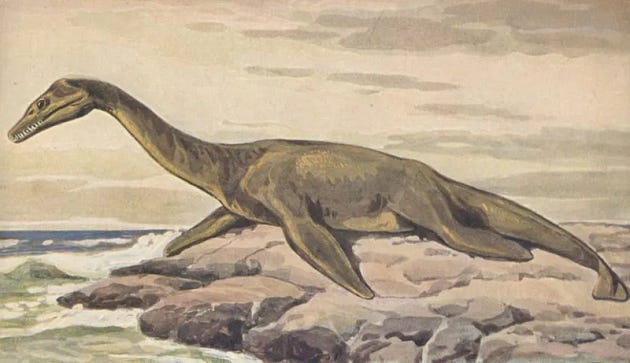
Reports of large, unidentified animals in remote environments have long existed. Among them, the creature said to inhabit Loch Ness remains one of the most persistent. The accounts are inconsistent and often disputed, yet they have endured for centuries, shaped by culture, technology, media, and evolving standards of evidence. In fact, interest in the Loch Ness Monster has become so widespread that organizations such as the Official Loch Ness Monster Sightings Register continue to catalog and archive reported encounters from around the world.
What emerges is not only a question of whether Nessie exists, but how uncertain observations become shared narratives. The story of the Loch Ness Monster sits at the intersection of history, folklore, psychology, and modern media. Whether interpreted as an undiscovered animal, a misunderstood natural phenomenon, or a legend amplified over time, Nessie continues to occupy a unique place in popular culture.
The Earliest Known Account
The earliest written account connected to the Loch Ness Monster dates back to 565 AD. It involves Saint Columba, an influential Irish abbot and missionary whose work helped spread Christianity throughout early medieval Scotland.
The story appears in The Life of Saint Columba, written by Adomnán in the late 7th century, roughly a century after the events it describes. According to the text, Columba encountered a group of Picts burying a man who had reportedly been attacked and killed by a “water beast” in the River Ness, which flows from Loch Ness.

The account quickly shifts from observation to miracle. Columba reportedly revived the dead man and later instructed one of his followers to cross the river. As the man entered the water, the creature allegedly emerged again and approached rapidly. Columba then made the sign of the cross and commanded the creature to retreat. According to the story, it immediately obeyed.
The narrative ends with conversion. Witnessing Columba’s authority over both death and nature, the observing Picts are said to have embraced Christianity.
How Reliable Is the Historical Record?
From a historical perspective, this account must be approached carefully. The Life of Saint Columba is a religious text designed to demonstrate holiness and divine power, not a scientific or historical record in the modern sense.
Miracle stories were common within this style of writing, and the text was composed long after the events it describes. That leaves considerable room for exaggeration, symbolic interpretation, or adaptation of earlier oral traditions. Still, the account remains significant because it is the earliest known written reference linking an unknown aquatic creature to the waters connected to Loch Ness.
Why Loch Ness Creates Uncertainty
The environment itself plays a major role in the legend’s persistence.
Loch Ness is one of the deepest and largest freshwater bodies in the United Kingdom, reaching depths of approximately 230 meters. Formed along a geological fault and shaped by glaciers, the loch is long, narrow, and steep-sided.

Its water is dark and murky because of peat washed in from the surrounding land. Visibility below the surface is extremely limited, and the cold temperature remains relatively constant year-round. These conditions make accurate observation difficult. Large fish, swimming deer, floating debris, waves, and boat wakes can appear distorted or animate under poor visibility. Distance and scale become difficult to judge, especially when only brief glimpses are available.
That combination of unclear visibility and expectation creates an ideal setting for ambiguous sightings.
The Birth of the Modern Legend
Although the Saint Columba story survived in historical texts, the Loch Ness Monster did not become a widespread cultural phenomenon until the 1930s.
A major turning point came in 1933 when a new road was built alongside Loch Ness. For the first time, large stretches of the loch became easily visible to passing motorists and tourists. As access increased, so did reported sightings. That same year, newspapers began publishing dramatic stories about a mysterious creature in the water. One widely discussed account came from George Spicer and his wife, who claimed they saw a large, long-necked creature crossing the road near the loch.
The timing mattered. Between the two World Wars, newspapers competed heavily for sensational stories, and public fascination with mystery and discovery was high. Nessie quickly transformed from an obscure historical anecdote into an international media phenomenon.
The Photograph That Defined Nessie
No piece of evidence shaped the Loch Ness Monster legend more than the famous “Surgeon’s Photograph” from 1934.

The image appeared to show a small head and long neck rising from the water. Because it seemed clearer than previous reports, many accepted it as compelling evidence. Decades later, however, the photograph was exposed as a hoax involving a small model attached to a toy submarine.
What makes this especially interesting is that belief in Nessie continued even after the hoax was revealed. By that point, the legend had already become larger than any single piece of evidence.
Folklore, Water Spirits, and Cultural Memory
Long before Nessie became a modern mystery, Scottish and Celtic folklore already contained stories about supernatural water creatures.
Among the most famous are selkies, beings that shift between seal and human form, and kelpies, dangerous water spirits said to lure people to their deaths. Other creatures, such as the Finfolk and the Blue Men of the Minch, continued this pattern of portraying deep water as mysterious and potentially dangerous.
These stories are less about specific creatures and more about what deep water represents. Across many cultures, water functions as a boundary between the known and the unknown.
That symbolism also appears in psychology. Deep water is often associated with the unconscious mind: hidden, unclear, and difficult to fully understand. When people encounter incomplete or uncertain information, they naturally attempt to interpret it. In places like Loch Ness, where visibility is poor, and the environment already feels mysterious, that tendency becomes even stronger. Seen through this lens, Nessie becomes part of a much older tradition rather than an isolated phenomenon.
Scientific Investigations and Skepticism
As public interest grew, organized scientific investigations followed.
One of the earliest large-scale efforts came from the Loch Ness Investigation Bureau, founded in 1961. For years, researchers conducted shoreline watches, photographic monitoring, and night observations, hoping to capture reliable evidence. Nothing conclusive was found.
In the 1970s, investigator Robert H. Rines used sonar and underwater photography to search the loch. Some images appeared to show flipper-like shapes beneath the surface, generating temporary excitement, though the results remained inconclusive.
Later operations, including Operation Deepscan led by Adrian Shine, used coordinated sonar sweeps across the loch. More recent studies incorporated underwater mapping and environmental DNA testing. None produced evidence of a large unknown creature. One major DNA study led by Neil Gemmell found substantial eel DNA in Loch Ness but no evidence of a giant reptilian animal.
Scientists have also examined how perception shapes sightings. In controlled experiments, participants shown unclear objects in the water sometimes interpreted them as creatures simply because they expected to see something unusual.
Famous Sightings Across the Decades
Despite the lack of scientific confirmation, reported sightings have continued for decades.
Some of the most notable include:
- 1933 — George Spicer Sighting: One of the earliest modern accounts describing a large creature crossing a road near the loch.
- 1960 — Tim Dinsdale Film: Footage captured by investigator Tim Dinsdale showing a moving object in the water.
- 1972 — Robert Rines Images: Underwater photographs interpreted by some as possible body structures or flippers.
- 1997 — Richard White Photographs: Images showing multiple dark humps moving through the loch.
- 2018 — Multiple Modern Reports: Witnesses, including military historian Ricky Phillips and NHS doctor Dipak Ram, reported unusual observations in the water.
- 2019 — Surge in Sightings: Eighteen sightings were recorded, the highest number in decades.
What these reports share is uncertainty. Most occur under poor visibility, at a distance, or for only a brief moment. Technology has made sightings easier to record and share, but not necessarily easier to verify.
Why the Legend Still Exists
The Loch Ness Monster persists because it occupies a space between skepticism and imagination.
Scientific research has narrowed the range of likely explanations, pointing toward known animals, environmental conditions, and psychological interpretation. At the same time, the legend continues to thrive because it taps into something larger than evidence alone.
Nessie represents uncertainty itself.
The story survives because it does not require resolution. Every blurry photograph, sonar reading, or unexplained movement keeps the possibility alive. The absence of definitive proof does not end the legend; in many ways, it sustains it. Loch Ness offers the perfect environment for that ambiguity. Its dark waters obscure visibility, its scale complicates perception, and its long cultural history encourages interpretation.
The question may no longer be whether Nessie exists in a measurable biological sense. Instead, it may be why people continue returning to the same body of water, generation after generation, hoping to glimpse something just beyond explanation.
For an audio version of this topic, look for The Ominous Archives podcast wherever you listen to podcasts.
Resources
“Between Realms: The Island as a Liminal Space of Redemption and Fantasy in ‘The Tempest’ and ‘Lost.’”
https://islandstudiesjournal.org/article/126242-between-realms-the-island-as-a-liminal-space-of-redemption-and-fantasy-in-the-tempest-and-lost
“Home to the Legendary Loch Ness Monster: Full Loch Ness Guide.”
https://www.scotlandswild.com/loch-ness
“Legends of the Lochs: Quests by Saints and Science.”
https://www.nytimes.com/1976/06/05/archives/legends-of-the-lochs-quests-by-saints-and-science.html
“Loch Ness Monster and Her Impact on Culture.”
https://scholarworks.uni.edu/csbsresearchconf/2020/all/16/
“The 1,300-Year Search for the Loch Ness Monster.”
https://www.nytimes.com/2023/08/25/world/europe/loch-ness-monster-search-timeline.html
“The 10 Most Famous Loch Ness Monster ‘Sightings.’”
https://a-z-animals.com/blog/the-most-famous-loch-ness-monster-sightings/
“The Latest Mysteries and Sightings Revealed.”
https://lochness.com/news/the-latest-mysteries-and-sightings-revealed/
“The Official Loch Ness Monster Sightings Register.”
https://www.lochnesssightings.com/
“St. Columba and the Loch Ness Monster.”
https://www.ncregister.com/blog/st-columba-and-the-loch-ness-monster

Dive into the chilling world of horror literature and explore spine-tingling tales crafted by Samantha Almeida. Follow me on social media for the latest updates, exclusive content, and a community of fellow horror enthusiasts. Remember, the shadows are always watching—stay connected and keep the scares alive!
Home | About | Services | Privacy Policy